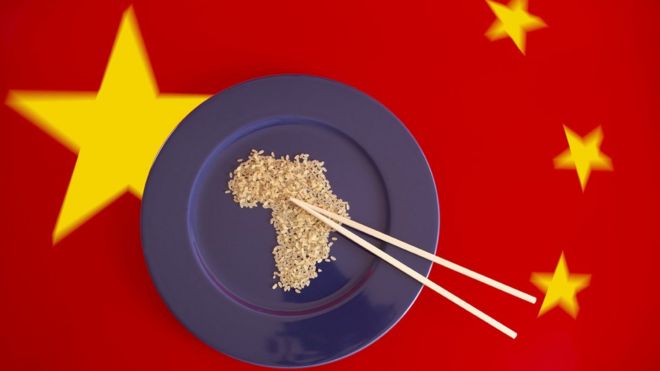
As Western powers retreat in Africa, China’s growing global influence now reaches deep.
The Sino-African relations is critical to China’s economic future as it sources much of its energy and resources from Africa.
To ensure its position and to ward off any criticism of being ‘a new coloniser’, China is pouring billions into African infrastructure and education.
China has delved into almost all the sectors in the continents, agriculture, health, infrastructure, education and even politics.
In all Chinese Universities including Renmin University, one of the best in China, this new approach is clearly in evidence.
About 60,000 African Students are currently recipients of a Confucius scholarship that provides tuition, accommodation, food and other living expenses.
going with the speed, the number will increase to almost 100,000 few years time.
The recipients all aim at becoming middlemen after their studies. As a result, they learn the Chinese language and culture so that they can create more awareness on the Chinese presence in Africa.
As we all know, Africa is still a growing country and most citizens are practically poor and unable to provide basic amenities / economic needs. However, the Chinese presence in the continent has successfully address most of the needs.
Nevertheless, most scholars believe that the scholarships are an important plank in China’s soft power push into Africa, believing that it is a way to bind Africa’s next generation of elites to China whereby the African students will act as a bridge.
The truth remains that China needs Africa’s raw materials to fuel its future growth, and to make sure it gets them, China is investing another $60 billion in roads, railways, ports, pipelines and communication networks.
Professor He Wenping from the Chinese Academy of Social Sciences, says it is a win-win situation.
“China needs a new market to offload its overcapacity, Africa needs to be industrialised and developed. So, it’s a perfect combination,” he said.
Since 2009, Africa has become China’s top trading partner. It is China’s second biggest source of crude oil — from countries like Nigeria, Angola and Sudan.
Namibia will provide uranium for China to become a world leader in nuclear power. Iron ore, copper, zinc and diamonds are also flowing out of the continent. China’s trade with Africa has increased forty-fold in the last 20 years.
Initially, much of the trade was one way and some labelled China as ‘the new colonialists’ and there were allegations of corruption, mistreatment and shoddy work.
Professor He says that view is driven by western powers and is now outdated.
It is not a curse, but a blessing. It improves African people’s living standard, and creates more business opportunities. It is not forced but based on mutual negotiation.
In the last decade, China has revamped its approach and there is more technology and skills transfer now.
Harriet Kariuki from Kenya, who is studying a doctorate at Peking University, sees China as the best option as its development model has lifted half-a-billion people out of poverty, but believes Africans still have to get more out of the relationship.
“Africans in general should use this as a chance to learn from mistakes of colonialism period and actually put their own policies that enforce collaboration and learn from Chinese,” she said.
China’s soft power approach in Africa, unlike other parts of the world, is having some success.
Recent poll results from the Pew Research Centre found 75 per cent of Africans have a favourable view about China’s influence.
 Loud Whispers
Leave a comment